 ▾
▾The future of the internet: Are we heading towards a world like Blade Runner?
Think of the breathtaking vision of the future from the movie Blade Runner – holographic ads, cyberspace, and ubiquitous networks. Can this fiction become reality? Find out what we can expect from the internet of the future and how the boundaries between reality and the virtual world will blur.

Imagine a world where reality and virtual space merge into one. A world where your thoughts travel through the internet at the speed of light and the boundaries between physical and digital are so thin you can barely distinguish them. This isn't just sci-fi fantasy – it's a future that is irreversibly approaching. What internet speeds can we expect in the coming years, and what will they enable?
From outdated dial-up to advanced fiber optics
A few decades ago, the internet was a luxury available to only a select few. Slow dial-up connections and limited data plans were soon replaced by technologies like DSL and cable connections, which brought significant acceleration.
Today, fiber optic connections are becoming the standard, allowing for dizzying speeds of several gigabits per second. This rapid development is mainly driven by increasing demand for data-intensive services, such as streaming high-resolution videos, playing graphically demanding games, and the expansion of the Internet of Things (IoT).
The future belongs to 5G and 6G networks
Imagine a world where downloading a movie takes seconds, video calls are seamless, and smart cities manage traffic with millimeter precision. This isn't sci-fi, but the future that 5G and 6G networks promise us. These technologies promise to accelerate and improve the internet to such an extent that they will change the way we live, work, and experience entertainment.
Current 4G networks, although still improving, are hitting their limits. The ever-increasing amount of data, smartphones, tablets, and other devices require more robust infrastructure. This is where 5G and 6G come into play. With download speeds of up to 10 Gbps for 5G and potentially up to 1 Tbps for 6G, the door opens to applications and services that we have only dreamed of until now.

Imagine a doctor performing surgery remotely using a robot and virtual reality, without the slightest signal delay. Or autonomous vehicles communicating in real-time, preventing accidents. These are just two examples that illustrate the transformative potential of 5G and 6G.
Both networks will not only serve faster internet browsing but will become the foundation for the development of smart cities, autonomous systems, and the Internet of Things, connecting billions of devices. With 6G, we could soon see holograms or haptic technologies, enabling us to feel remote objects by touch.
The transition to 5G and 6G, of course, comes with challenges. Building the necessary infrastructure will require significant investments. Signal coverage will expand gradually and won't be available everywhere immediately.
The internet in virtual and augmented reality: A gateway to new worlds
With the development of the internet, we are slowly but surely entering an era where connectivity is not just about download and upload speeds but about how deeply we can immerse ourselves in the digital world. Virtual and augmented reality (VR/AR) are technologies that promise to change our perspective on the internet and how we use it.
Imagine that instead of browsing traditional web pages, you find yourself inside a virtual room where you can interactively browse products in a store, meet friends in a digital square, or visit distant destinations without leaving your home.
Students will be able to attend virtual classes where they can carry out experiments in laboratories without needing physical equipment. Businesses will be able to organize meetings in virtual offices, where each participant feels like they are in the same room with the others, even though they are scattered around the world.

A quantum revolution is likely ahead
Another technological revolution looms on the horizon that could push the internet into realms unimaginable today – quantum computers. These machines with unprecedented computing power, based on the principles of quantum mechanics, could transform the very fabric of the internet.
Imagine a network that is not only exponentially faster than anything we know today but also unbreakably secure thanks to quantum encryption. Such a network would withstand any hacking attempt and guarantee absolute data protection.
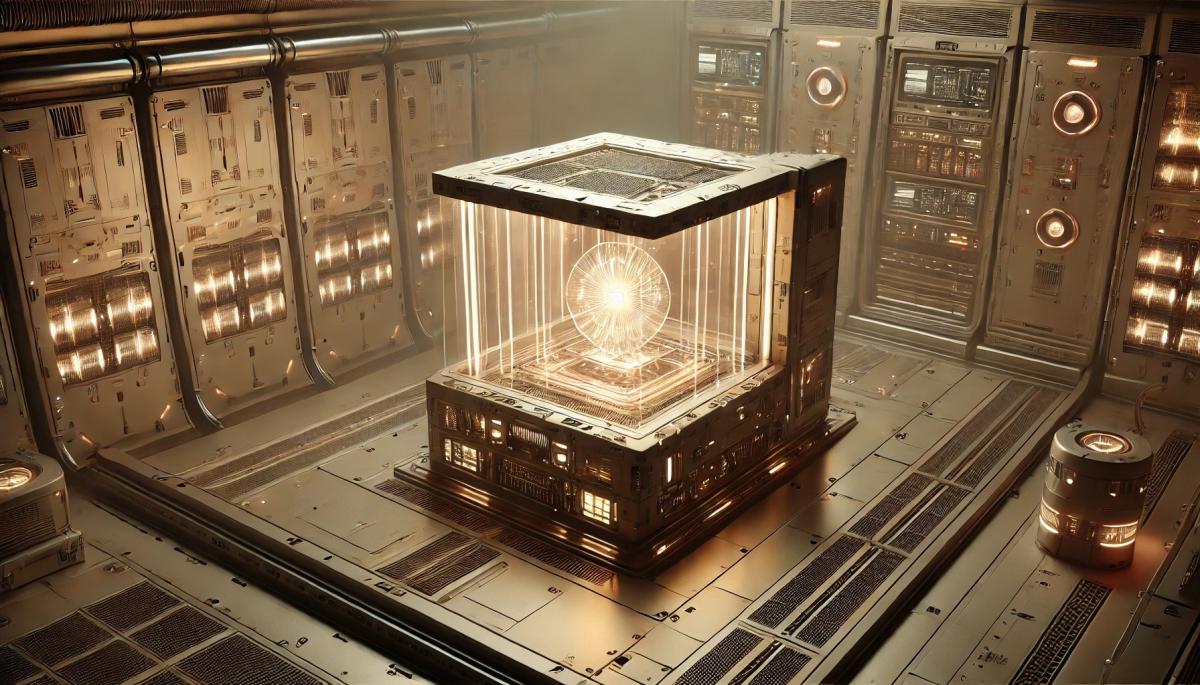
Quantum computers could also speed up and streamline countless online processes, from searching for information and simulating complex systems to developing new materials and drugs. But that's not all. Quantum computers could enable entirely new forms of online services and applications that we can't even imagine today.
Fast and accessible internet is crucial not only for entertainment but also for economic growth, innovation development, and improving the quality of life. It enables the creation of new industries, simplifies remote work, and makes education and information accessible to all without distinction.
Investments in technology and infrastructure open the door to a future where the online world will be accessible to everyone without limitations, and connectivity will drive progress.
Are you chatting with a human or a bot? How to identify AI in chat

Online chats are often handled by artificial intelligence today, and at first glance, the responses appear to be from a real person. This is especially true for customer support, where speed and fluency are key. We'll look at how to identify AI in chat, what signs you can use to distinguish it from a human, and where the line of recognition becomes very thin.
What is ransomware and why does it no longer threaten only large companies?

Ransomware attacks are among the most common cyber threats today and are no longer just a concern for large companies. Just one careless click can cost you access to your data. We'll explain what ransomware is, how it works, and why attackers are increasingly targeting average users and smaller businesses.
How zero trust works: why mere connectivity no longer means safety

Connecting to the internet today is not just a matter of speed but also of trust. Networks handle more and more devices, sensitive data, and services that communicate almost constantly. This is why an approach called zero trust has emerged, where nothing is automatically considered safe. The article explains why this model was created and how it subtly influences everyday internet functioning.
10 reasons why your phone is drained sooner than expected

It happens that the battery life decreases faster than one would expect, even when the device is not particularly stressed during the day. Often, it's not a single specific error but a sum of small influences that gradually accumulate. This article explains what has the greatest impact on battery life, when idle draining occurs, and why this can turn into an issue causing the phone not to last even one day.
Wi-Fi on a plane? Yes, but it works differently than at home
Connecting to the internet during a flight is no longer an exception, but it still doesn't work as you're used to at home. In-flight Wi-Fi depends on the technology used, the type of aircraft, and network congestion, and paying for access doesn't always mean fast connection. In this article, we'll explain how in-flight internet works, why it can be slow, and when you can rely on it.
RCS messages: what they are, how they work, and when it's better to turn them off

RCS chat is appearing more frequently in mobile devices, especially with the arrival of iOS 18 and the gradual phasing out of older networks. It is a method of communication that uses the internet, offering higher quality sharing of photos and videos than traditional SMS. We'll explain what RCS means and when it makes sense to keep it enabled.