 ▾
▾Is blue light really a problem? The answer isn't so simple
The topic of blue light has led to many simplifications and unnecessary fears. Blue light exposure before sleep is often discussed, but its impact is not limited to just sleep. Let's put things in context, separate facts from myths, and see when it makes sense to address its effects and when it is more about excessive concern.
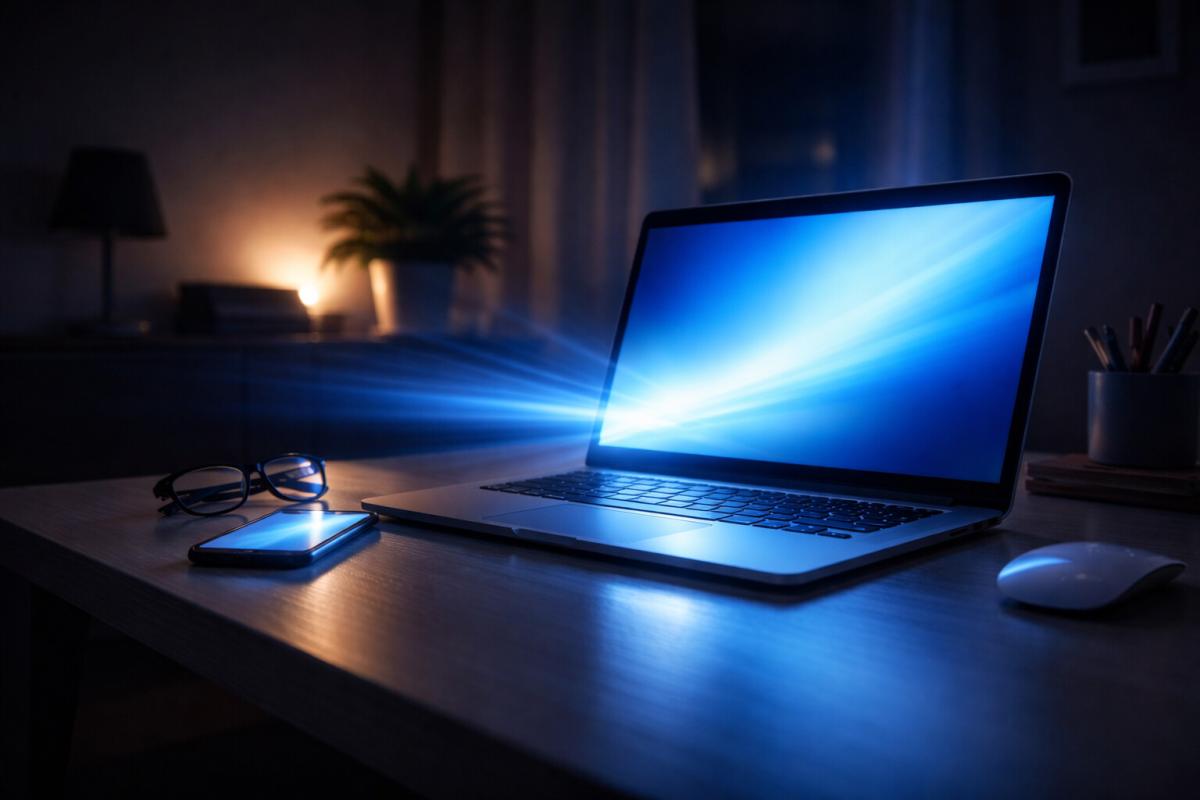
Screens are now part of almost every part of the day. A notebook or a big monitor for work, a phone for messages and social media, an evening series, or more scrolling on the mobile. It is precisely during long usage of screens, often even in the evening hours, that blue light and its possible impact on the human body are discussed. While some associate it with fatigue, worse sleep, or tired eyes, others consider these worries exaggerated.
However, the reality is neither simple nor universal. It depends on the intensity of the light, the duration of exposure, and the time of day we are exposed to the light from the screens. Therefore, in this article, we will put the whole problem into a broader context and show when it makes sense to address its effects, what truly affects the body, vision, or sleep, and where we are more likely to encounter simplified ideas rather than reality.
What is blue light and where do we encounter it today?
Blue light is part of the visible light spectrum and belongs among the short-wave components of light. It naturally occurs in sunlight, and the human body has been accustomed to its presence for thousands of years. By itself, it is not something unnatural.
The change has occurred in where it comes from today. Besides the sun, displays have become a significant source, emitting light directly and evenly, regardless of the time of day. It's not about the amount, but the way and context of exposure. And it is this shift that explains why blue light is talked about differently than before.
Why has it become talked about as a problem
The debate around light from screens did not start because something fundamentally new appeared. The main change was in how the results of research began to be interpreted. What used to remain primarily in professional articles about sleep and biological rhythms gradually made its way into media, manufacturers' recommendations, and common advice for using technology.
Simplification played a significant role in this. Careful formulations about possible impact on wakefulness or evening routine quickly turned into general conclusions that are easy to communicate. Once new functions in devices and various supplement offers were added, the topic began to take on a life of its own.
Gradually, various issues began to be passed off under one problem. The effect of light, fatigue from long screen watching, inappropriate habits, and overall digital stress. In practice, this means that often one culprit is spoken of, even though it is actually a combination of several different factors.
How does blue light affect our bodies
The light we perceive with our eyes does not only affect sight. The body also uses it as a signal for the level of activity. Some parts of the light spectrum have a stronger influence on this reaction, and it is here that we get to the question of what blue light causes.
The blue component of light promotes a state of alertness. The body reads it as information to stay active, focused, and ready to respond. It is not a mistake or a disorder, but a natural response of the organism to light stimuli.
The effect of light itself is therefore not a problem. The important thing is that this signal functions automatically and the body does not evaluate it consciously. This is precisely why light can have an effect even during times when we would not intuitively expect it. And here lies the space for questions related to sleep, fatigue, and recovery.
Blue light before bed – does it have a harmful effect?
When using a phone or tablet in the evening, it is not just about them being lit. Blue light before bed is often combined with behavior that keeps the body in active mode. A typical example is scrolling on social media, where attention is constantly shifting, and the brain remains in a state of expecting the next stimulus.
This combination is key. Light gives the body an alertness signal, and content on the screen simultaneously stimulates it mentally. The result is not necessarily that a person cannot fall asleep at all, but that it becomes harder to "disconnect." Falling asleep can be prolonged, and sleep can be shallower, even if it lasts long enough.
It is important to note that the same effect might not have short and targeted use of the device. There is a significant difference between reading one message in the evening and endlessly browsing content for several tens of minutes. It is during these moments that blue light before sleep makes sense to address as part of an overall evening habit, not as an isolated technical problem.
Does it damage vision?
There is a lot of talk about the impact of light from screens on the eyes. Concerns often arise that blue light causes long-term eye damage or even destroys vision. This idea is simplified and mixes together several different things.
In common conditions of using digital devices, it is not confirmed that light from screens leads to permanent eye damage or retinal harm. What people most often feel is not damage, but eye fatigue. Burning, irritation, dryness, or blurred vision after a long time at a screen is mainly related to prolonged close-up viewing, less blinking, and eyes being in constant tension.
Light plays more of a supporting role in this. It increases contrast and brightness, which can highlight fatigue, but on its own, it is not the main culprit. Similar issues would occur even with long reading of a book or working with papers, they just happen to be talked about less.
Therefore, it is important to separate two things. One is long-term visual damage, for which there is no convincing evidence in common screen use. The other is short-term discomfort and fatigue, which is more related to the way the eyes work rather than light itself being dangerous. And it is precisely here that the impression of a problem often arises, which in reality has little to do with permanent visual damage.
Glasses against blue light: why opinions differ
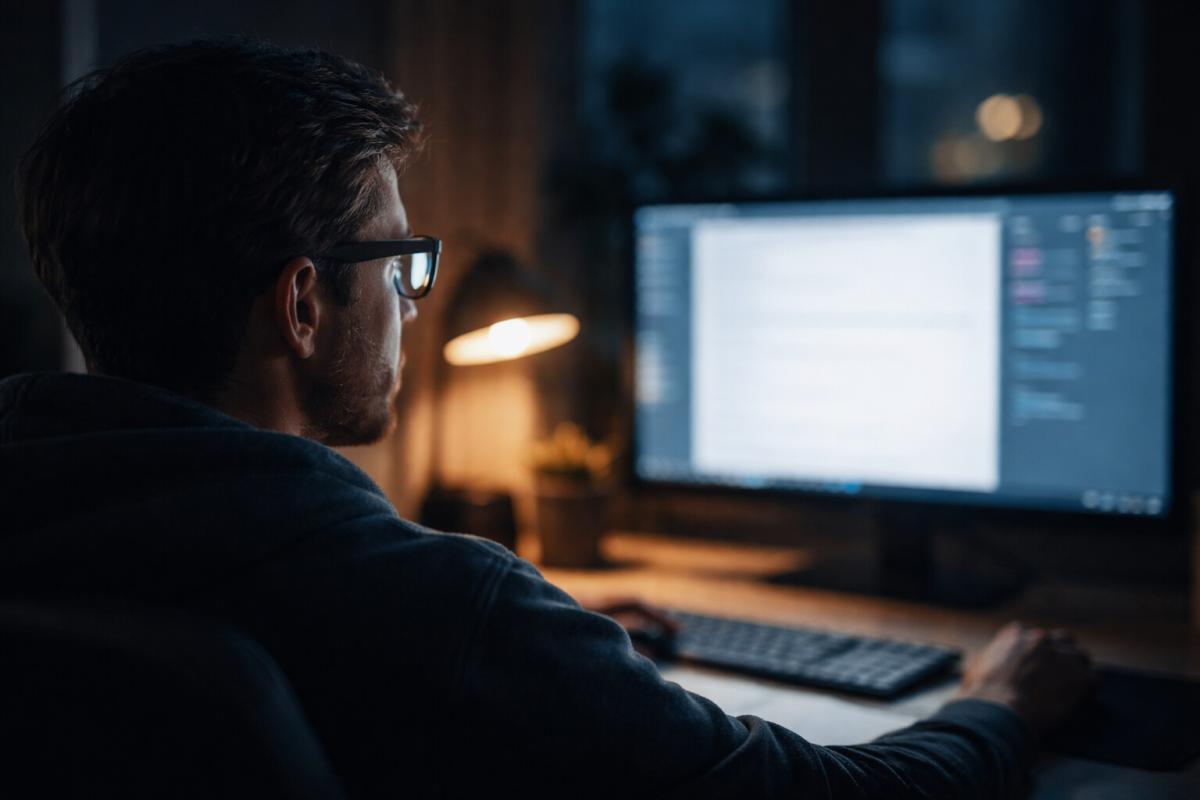
Glasses against blue light are a chapter in themselves. While there is at least basic consensus on some topics, opinions significantly diverge here. For some, they are a useful accessory, others see them more as clever marketing that promises more than it can deliver.
One of the reasons is that there are no universal glasses. They differ in the type of filter, the degree of light transmittance, and how significantly they affect color perception. The resulting effect can thus vary for each person, and people's experiences are often incomparable.
Differences also lie in what we expect from the glasses. If someone takes them as a small help in a specific situation, they may perceive a positive change. However, if they expect them to solve all discomforts associated with screen use, they are often disappointed. Glasses do not address the way of work, the duration of device use, or the overall daily routine.
This is why there are such contradictory experiences surrounding this topic. Glasses against blue light can provide subjective relief for some people, while for others, the difference almost doesn't manifest. It depends on when you use them, how long you spend time on screens, and what habits you have in both work and evening device use.
Can anything be done about blue light?
Yes, and typically it doesn’t involve any complex measures or special tools. In practice, it makes more sense to adjust how you use your devices than to try to completely eliminate the light.
1. Adjust your ambient lighting, not just your device
Using a phone or laptop in complete darkness increases the contrast between the screen and the surroundings. The eyes then need to work more intensely, and fatigue sets in faster. Soft ambient lighting in the room often helps more than screen filters alone.
2. Use night mode and reduce brightness
Night mode on your phone or computer makes sense not only for the color of the light but mainly because it allows you to significantly reduce the screen brightness. High brightness combined with a dark environment tends to be more stressful for the eyes and overall comfort than the blue light itself. Limiting blue light addresses wakefulness timing, while reducing brightness has an immediate practical impact on eye fatigue and screen perception.
3. Consider the length of continuous use
Prolonged screen viewing without breaks strains both the eyes and focus regardless of the blue light ratio. Short breaks, changing your gaze distance, or consciously redirecting attention away from the screen have a real effect.
4. In the evening, address content as well as light
Evening screen modes and filters can help, but on their own, they're not enough. There is a difference between calm reading and endless scrolling, which keeps the brain active. The combination of light and content type often determines how easily the body can relax.
5. Consider glasses as a supplement, not a solution
Blue light glasses may provide subjective relief in specific situations, but they should not be the sole step. They function more as a supplement to environment adjustments and habits, not as a universal answer to all screen-related issues.
Blue light is not a standalone problem with a clear explanation or universal solution. Its impact depends on when we are exposed to it, how long, and in what context we use the devices. If we strip away simplifications and extreme claims, the topic becomes more about daily habits than a technological threat requiring strict protection. This is the key to using technology wisely and without unnecessary concerns.
Are you chatting with a human or a bot? How to identify AI in chat

Online chats are often handled by artificial intelligence today, and at first glance, the responses appear to be from a real person. This is especially true for customer support, where speed and fluency are key. We'll look at how to identify AI in chat, what signs you can use to distinguish it from a human, and where the line of recognition becomes very thin.
What is ransomware and why does it no longer threaten only large companies?

Ransomware attacks are among the most common cyber threats today and are no longer just a concern for large companies. Just one careless click can cost you access to your data. We'll explain what ransomware is, how it works, and why attackers are increasingly targeting average users and smaller businesses.
How zero trust works: why mere connectivity no longer means safety
Connecting to the internet today is not just a matter of speed but also of trust. Networks handle more and more devices, sensitive data, and services that communicate almost constantly. This is why an approach called zero trust has emerged, where nothing is automatically considered safe. The article explains why this model was created and how it subtly influences everyday internet functioning.
10 reasons why your phone is drained sooner than expected

It happens that the battery life decreases faster than one would expect, even when the device is not particularly stressed during the day. Often, it's not a single specific error but a sum of small influences that gradually accumulate. This article explains what has the greatest impact on battery life, when idle draining occurs, and why this can turn into an issue causing the phone not to last even one day.
Wi-Fi on a plane? Yes, but it works differently than at home
Connecting to the internet during a flight is no longer an exception, but it still doesn't work as you're used to at home. In-flight Wi-Fi depends on the technology used, the type of aircraft, and network congestion, and paying for access doesn't always mean fast connection. In this article, we'll explain how in-flight internet works, why it can be slow, and when you can rely on it.
RCS messages: what they are, how they work, and when it's better to turn them off
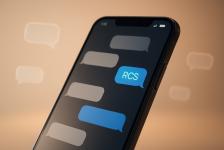
RCS chat is appearing more frequently in mobile devices, especially with the arrival of iOS 18 and the gradual phasing out of older networks. It is a method of communication that uses the internet, offering higher quality sharing of photos and videos than traditional SMS. We'll explain what RCS means and when it makes sense to keep it enabled.