 ▾
▾Internet on the go: How to ensure fast internet when you're away from home?
Stay online even on the go? Whether you want to share experiences with loved ones, plan a route, or simply pass the time with a movie, the internet is indispensable. But how can you ensure fast and secure connection outside of home? Explore various options with us, from mobile data and public Wi-Fi networks to specialized solutions that provide internet even on vacation.

The internet has become an indispensable tool even while traveling. Whether you need to plan a route, book accommodation, or just connect with loved ones, a fast and reliable connection is key. But how can you ensure it outside of home?
Fortunately, there are a number of ways to do that. The best option depends on your individual needs, the length and destination of your trip, and your financial options. Let's take a detailed look at some of the possibilities.
-
Mobile data
The simplest and most common option is to use mobile data. Most mobile operators offer data packages that include a certain amount of data for internet browsing. Within the European Union, mobile data can be used under the same conditions as in the home country, making travel across Europe much easier.
Advantages
- Simply activate mobile data and you can surf
- Mobile signal is available in most populated areas
Disadvantages
- Using mobile data outside the EU can be expensive
- The amount of data in the package is limited, and exceeding the limit can lead to high charges
- The speed of connection varies depending on network coverage and can be slow in some areas
Travel Tips
Before traveling, check the prices and availability of mobile data in your destination. Also, activate a roaming data package to avoid high charges. To save data, download maps, music, and movies before your trip, as most apps and platforms offer this option.

-
Public Wi-Fi networks
Another way to connect to the internet on the go is public Wi-Fi networks. These networks are available in many cafes, restaurants, hotels, airports, and other public spaces. Their main advantage is free access.
On the other hand, they are very risky as they are often not sufficiently secured, and your data can be easily misused. Security threats can hide even behind seemingly innocent network names.
Cyber attackers often create fake Wi-Fi hotspots that appear to be legitimate networks, aiming to lure sensitive information such as passwords or credit card details from unsuspecting users.
Advantages
- Public Wi-Fi networks are often free
- Networks are available in many places
Disadvantages
- Public Wi-Fi networks are often not sufficiently secured, increasing the risk of data theft
- Connection to public Wi-Fi networks can be unstable and slow, especially during peak times
- Some networks require registration and the provision of personal information
Travel Tips
When connecting to public Wi-Fi networks, prioritize security and avoid entering sensitive information, such as bank account passwords. If possible, use a VPN for data encryption and privacy protection.
-
Portable Wi-Fi hotspots
Portable Wi-Fi hotspots are devices that create their own Wi-Fi network using mobile data. Simply insert a SIM card with a data plan, and you can connect to the internet with multiple devices simultaneously. Moreover, they are usually quite small, so you can take them with you on a cabin trip or on longer journeys.
Advantages
- Create your own secure Wi-Fi network
- Multiple devices can connect to the hotspot simultaneously
- The speed and reliability of the connection is comparable to mobile data
Disadvantages
- Purchasing a hotspot and data plan presents additional costs
- The hotspot needs to be regularly charged or directly connected to a power source
Travel Tips
When selecting an internet connection, compare prices and plans from different providers. This can save you even hundreds of crowns. Also, check the availability and network coverage in your destination.

-
Foreign SIM cards
Special SIM cards designed for travelers offer favorable rates for calls, SMS, and mobile data abroad. These cards are available in various variants and with varying data capacities. You can purchase them practically anywhere abroad. If you are unsure which SIM card to choose, look up the necessary information about local operators online.
Advantages
- Calls, SMS, and mobile data are often cheaper than when roaming
- Simply replace the SIM card in your phone and you're done
Disadvantages
- SIM cards may not be available in all destinations
- Cards can have limited validity
Travel Tips
Purchase a SIM card online or at the airport upon arrival at your destination. Before that, check the compatibility of the SIM card with your phone.
-
Satellite internet
This technology allows for internet connection practically anywhere in the world, whether you're in the middle of the ocean on a yacht, scaling Himalayan peaks, or just spending a vacation in a remote cabin without mobile signal coverage.
Satellite internet works by communicating with satellites orbiting the Earth. The signal travels from the user's device to the satellite and back to the provider's ground station. Though this path is longer than traditional internet connections, it enables coverage even in the remotest corners of the planet.
Advantages
- Satellite internet is available even in remote areas
- Simple installation
Disadvantages
- Satellite internet is typically more expensive
- Some providers offer slower connection speeds
- Special equipment is required for the connection
Travel Tips
If you are planning to venture into remote areas and are considering satellite internet, gather information in advance about available providers and their plans. Also, check if your destination imposes any restrictions on using satellite internet. Additionally, verify what equipment is needed to connect to satellite internet.
Whether you're scaling mountain peaks, enjoying the sun on a deserted beach, or exploring bustling cities, with a bit of planning and the right internet connection, you don't have to fear losing touch with the outside world.
Is blue light really a problem? The answer isn't so simple

The topic of blue light has led to many simplifications and unnecessary fears. Blue light exposure before sleep is often discussed, but its impact is not limited to just sleep. Let's put things in context, separate facts from myths, and see when it makes sense to address its effects and when it is more about excessive concern.
Are you chatting with a human or a bot? How to identify AI in chat

Online chats are often handled by artificial intelligence today, and at first glance, the responses appear to be from a real person. This is especially true for customer support, where speed and fluency are key. We'll look at how to identify AI in chat, what signs you can use to distinguish it from a human, and where the line of recognition becomes very thin.
What is ransomware and why does it no longer threaten only large companies?

Ransomware attacks are among the most common cyber threats today and are no longer just a concern for large companies. Just one careless click can cost you access to your data. We'll explain what ransomware is, how it works, and why attackers are increasingly targeting average users and smaller businesses.
How zero trust works: why mere connectivity no longer means safety

Connecting to the internet today is not just a matter of speed but also of trust. Networks handle more and more devices, sensitive data, and services that communicate almost constantly. This is why an approach called zero trust has emerged, where nothing is automatically considered safe. The article explains why this model was created and how it subtly influences everyday internet functioning.
10 reasons why your phone is drained sooner than expected

It happens that the battery life decreases faster than one would expect, even when the device is not particularly stressed during the day. Often, it's not a single specific error but a sum of small influences that gradually accumulate. This article explains what has the greatest impact on battery life, when idle draining occurs, and why this can turn into an issue causing the phone not to last even one day.
Wi-Fi on a plane? Yes, but it works differently than at home
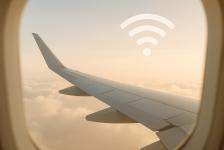
Connecting to the internet during a flight is no longer an exception, but it still doesn't work as you're used to at home. In-flight Wi-Fi depends on the technology used, the type of aircraft, and network congestion, and paying for access doesn't always mean fast connection. In this article, we'll explain how in-flight internet works, why it can be slow, and when you can rely on it.