 ▾
▾digital carbon footprint: how the internet and online services burden the planet
Everyday online activities have a real energy footprint that quickly multiplies in total. In the article, we will look at what digital carbon footprint means, how much energy regular internet use costs, and which activities burden the environment the most. Areas where consumption is growing the fastest and impact is not immediately visible deserve special attention.

We take the internet for granted. We open a web page, watch a video, reply to a message, and move on. Everything is fast, smooth, and without waiting. That's precisely why we usually don't realize that each such small action relies on the continuous operation of networks, servers, and devices that run constantly, no matter what we are doing.
In this way, the digital carbon footprint is created. Not as one big problem, but as a sum of thousands of small energy demands that quickly add up with the growing volume of online activities. The internet doesn't have one chimney or one visible place where its impact is clearly seen. That's why it's crucial to understand where the burden actually comes from and why it grows precisely where we might not expect it.
What is digital carbon footprint?
Digital carbon footprint refers to the amount of emissions generated by the operation of digital services and devices. It's not just about electricity consumption at home, but the energy needed to transfer, process, and store data. Data centers, network infrastructure, and the way we connect to the internet all play a role.
The fundamental difference compared to regular energy consumption is that digital services operate continuously. Data is not only transferred when we actively watch something. Servers must be ready to respond at any time, keep content available and manage traffic peaks. This constant readiness is the reason why digital operations consume so much energy even outside the moments when we are aware of it.
How much energy does the internet consume and why does it matter
According to available estimates, the global internet infrastructure consumed approximately 1.7% of the world's energy consumption in 2020. This number doesn't include just end-user devices but the entire ecosystem from transmission networks to data centers where data is stored and processed.
As the number of users increases, so does the energy demand. In 2020, over 4 billion people, more than half of the world's population, used the internet, and this number continues to grow. Each increase in traffic means higher demands on servers, network infrastructure, and cooling technologies that must run non-stop.
Data centers play a significant role in this. They consume large amounts of electricity not just for computing power but also for heat removal. Up to 40% of their energy consumption is attributed to cooling, often using air conditioning or water systems. The overall energy consumption of the internet thus reflects not only in carbon dioxide emissions but also in the utilization of water and other resources.
Today, the internet's carbon footprint is approaching the impact of global air transportation. This scale is precisely why what started as a marginal topic is becoming an important part of discussions about the sustainability of the digital world.
The biggest sources of burden: streaming, social networks, and others
The largest part of the internet's environmental impact today doesn't arise from regular web browsing but from activities that handle large volumes of data. A typical example is video streaming. High-resolution video transmission means a constant flow of data between data centers, networks, and end devices. The higher the video quality, the higher the energy consumption of the internet throughout the entire chain.
Social networks function similarly. Short videos, autoplay content, endless feeds, and frequent data refreshes create constant traffic that runs in the background even when we don't pay full attention to it. In the sum of millions of users, this accounts for a significant part of the internet's carbon footprint, even if individual interactions seem negligible.
Other digital services also play a role, such as cloud storage, online backups, or applications that constantly sync data. These "invisible" processes contribute to the digital carbon footprint growing not suddenly but slowly and steadily with each additional data flow.
Satellite internet and its carbon footprint
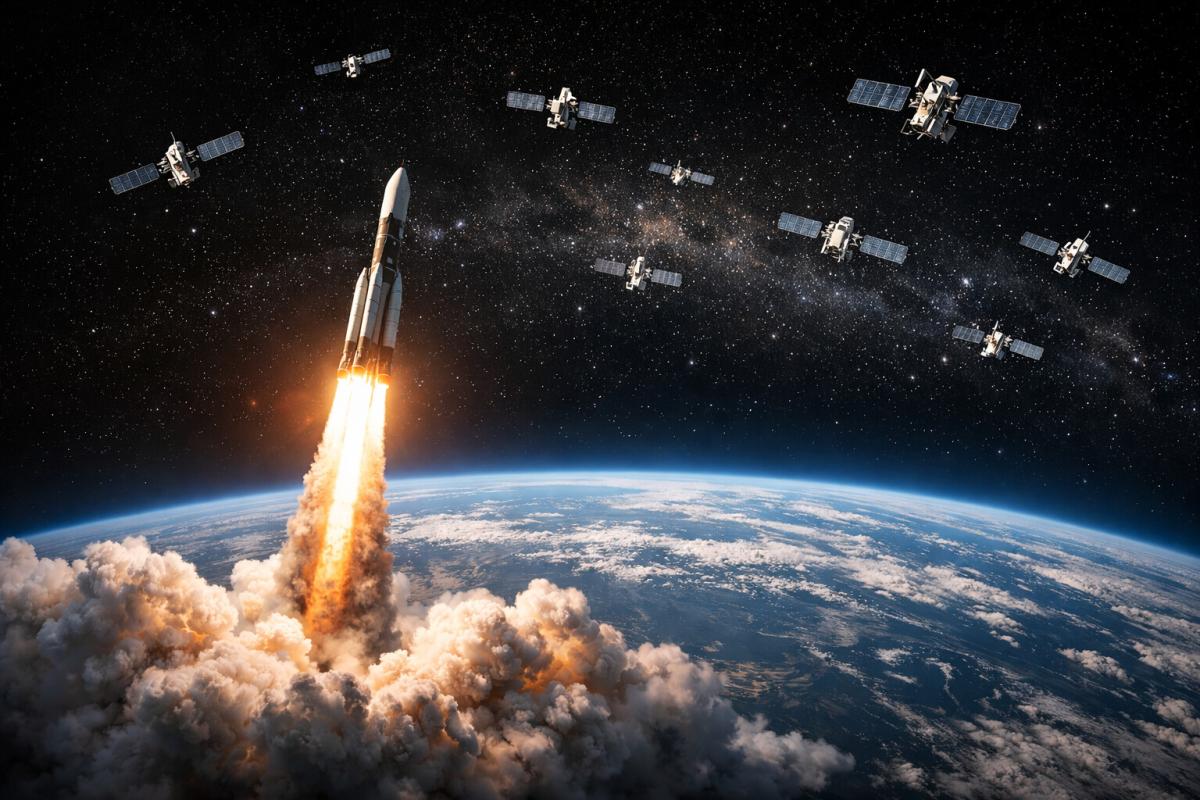
In satellite internet, the main ecological burden arises elsewhere than in regular networks. Not during actual use but already in the operation phase of satellite constellations. Each satellite needs to be launched into orbit using a rocket, which results in significant emissions in a short time.
According to analyses by scientists from the USA and the UK, the carbon footprint of satellite internet can be 14x to 21x higher per user than mobile or fixed connections. If calculations also include other particles generated during rocket launches such as black carbon or aluminum oxide, this difference can be 31x to 91x higher.
The burden is not one-time, either. Satellites have a lifespan of about four to five years, after which they degrade in the atmosphere and must be replaced with new ones. This means repeated launches and further emissions. In practice, satellite internet makes sense mainly where other infrastructure is not available. From an ecological perspective, however, it is one of the most demanding ways of connecting.
How is the digital carbon footprint measured
One of the main problems with the digital carbon footprint is that for a long time there were no tools capable of converting it into concrete figures. The internet has no clear boundaries or unified methodology, so its impact was perceived more abstractly than measurably.
This is gradually changing. Tools are emerging that can estimate the environmental impact of specific websites or online services. Evaluations are based, for example, on the volume of data transmitted, the method of hosting, or the energy source powering the servers. Thanks to this, it's possible to at least partially compare how demanding one digital action or page display is.
Even though these measurements are not 100% accurate, they shift the debate from a general level to a more practical perspective. Digital operations stop being invisible and start being something that can be actively managed.
How can you reduce your digital carbon footprint?
Reducing your digital carbon footprint doesn't mean stopping using the internet. Most changes involve small decisions that affect the amount of data transferred and the way we use digital services. However, in total, these details make the biggest difference.
Limit unnecessary high-resolution streaming
Video is among the most energy-intensive forms of online content. If you're watching content on a smaller screen, using the highest available resolution often doesn't make sense. Lower quality means lower data flow and reduced burden throughout the transmission chain.
Turn off autoplay content
Automatically playing videos on social networks or news sites increase the volume of transferred data without the user being aware of it. Turning off this feature reduces unnecessary traffic that runs in the background without real benefit.
Use the cloud wisely
Online storage and data synchronization are convenient, but they often run continuously. Regularly deleting old files, limiting automatic backups, or transferring some data to local storage helps reduce the long-term server burden.
Prefer stable fixed connections
From an energy consumption perspective, fixed connections are generally more efficient than mobile networks or other alternatives. If you have the option to work from home on a fixed internet connection, you reduce the energy demand of data transfers compared to frequent use of mobile connections.
Don't prolong the life of digital content unnecessarily
Emails, old attachments, unused accounts, or archived data get stored and backed up even when you no longer actively use them. Regular digital cleanup helps limit the volume of data that the infrastructure has to maintain long-term.
WPA, WPA2, WPA3: Which Wi-Fi security should you use today?

WPA, WPA2, WPA3, AES or TKIP? Wi-Fi security settings might initially seem unnecessarily complicated. However, when you understand what each abbreviation stands for, it becomes fairly simple. Therefore, we'll explain the differences between them and which is the best choice today. We'll also suggest what settings to choose if you have older devices at home that don't support the latest standard.
Is incognito mode really anonymous? Who still sees what you're doing

Do you think incognito mode hides you from everyone on the internet? In reality, it works a bit differently. We explain what it actually does, when it's sensible to use it, who can still see your activity, and whether history can be traced in incognito mode.
Why Does AI Hallucinate? A Peek Under the Hood of Language Models

AI can answer almost any question in just a few seconds. However, sometimes it confidently states information that is not true. Why does this happen and what are so-called AI hallucinations? In this article, we'll explain how large language models work, why they sometimes create false answers and how developers are gradually trying to mitigate this issue.
What is a CDN and why is internet content copied worldwide

Behind every loaded video, photo, or webpage is a technology called CDN. It is used by streaming services, social networks, and regular websites, yet many people have never heard of it. In this article, we will explain what this abbreviation means, how it works, why internet content is stored in various locations around the world, and why today's internet can hardly do without it.
Who will inherit your photos, emails and accounts? Digital legacy is rarely addressed

When talking about inheritance, most people think of a house, a car or money in the account. Yet we also leave behind thousands of photos, emails, social media accounts or data stored in the cloud. What happens to them after death, and who will gain access to them? This article looks at how digital legacy works, why the bereaved may have problems with data, and how to get organized in your online footprint today.
Where does the internet really flow? Hair-thin fibers connecting continents

The idea that the internet flows mainly through the air is a myth. The entire technological world relies on heavy hardware buried in the sand of the seas. In the article, we will examine the technology of submarine cables. You will learn how optical fibers work, what laying them from ships entails, and how the depths of the oceans have become a geopolitical battlefield.